

Healthcare ASL Interpreting and Captioning Services
Support accessible communication for patients, providers, and healthcare staff with qualified ASL interpreters and real-time captioning services nationwide. Complete the request form below to get started.

Services available for large hospitals and small, private practices alike.
Appointments for:
-
Family medicine
-
Dentistry
-
Routine check-ups and physicals
-
Eye-care and optometry
-
Hearing-care and audiology
-
Surgery, post-op, and recovery
-
Orthodontics
-
Physical therapy
-
Occupational therapy
-
Gynecology and obstetrics
-
Mental health
-
Long-term care
-
Hospice care
-
Home care
All the things you need help with.

Video Remote Interpreting (VRI)
Within minutes, DSU can provide access to the country’s best pool of interpreters as simply as launching a web browser. VRI is accessibility made simple.
More information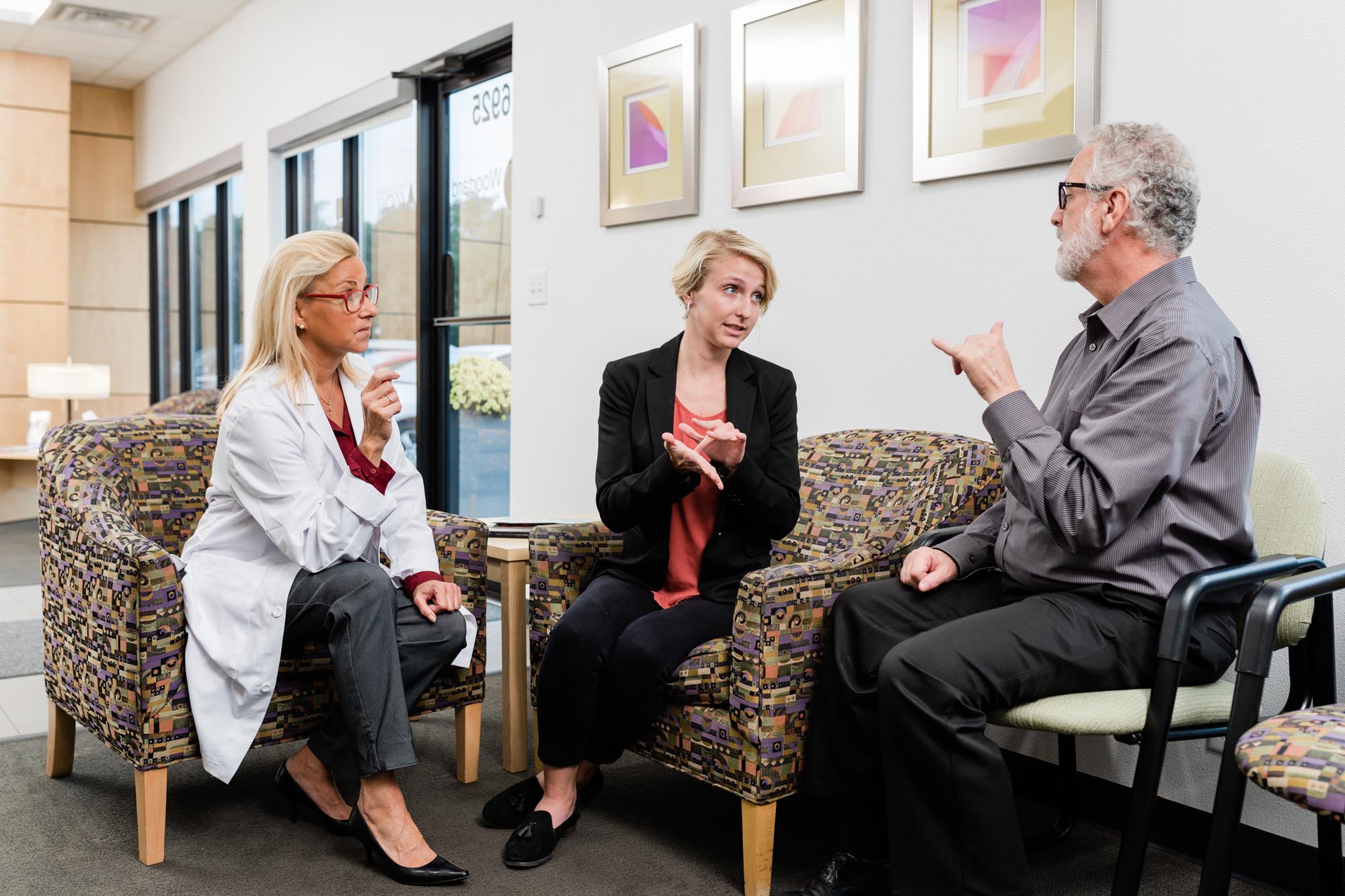
In-Person Interpreting
We have a large national network of interpreters available anywhere in the country. When you need a top-notch specialized interpreter in your area, we have you covered.
More information
CART Captioning
With easy-to-use solutions, DSU can caption in real-time for view by any participant with an internet-capable device.
More informationTrusted by clients across the nation




-

Certified Deaf Interpreting (CDI)
-
Multilingual interpreting
-
Team interpreting
-

Video Remote Interpreting




Healthcare Access Case Study
FAQs
When should a healthcare provider arrange for an ASL interpreter?
Healthcare providers should arrange for a qualified ASL interpreter whenever a Deaf or hard-of-hearing patient or companion requires sign language to communicate effectively. Medical interpreting may be needed for appointments, hospital admissions, emergency care, surgeries, behavioral health visits, therapy sessions, informed consent discussions, discharge instructions, and telehealth appointments. Providing timely communication access helps patients understand their care and actively participate in medical decision-making.
Can hospitals and clinics use remote ASL interpreting or remote captioning?
Yes. Many hospitals, clinics, physician offices, and healthcare systems use Video Remote Interpreting (VRI) and remote CART captioning to provide communication access. Remote services can be effective for scheduled appointments, telehealth visits, outpatient care, and other situations where the technology supports clear audio and video communication. When remote services are not appropriate for a particular patient or situation, onsite interpreting or captioning may provide a more effective solution.
What types of healthcare organizations use ASL interpreting and captioning services?
ASL interpreting and CART captioning are used by hospitals, health systems, medical clinics, urgent care centers, physician practices, dental offices, behavioral health providers, rehabilitation facilities, physical therapy clinics, specialty practices, public health agencies, and long-term care facilities. Communication access services can support patient appointments, family consultations, educational programs, support groups, and staff training, helping organizations create accessible healthcare experiences.
Are DSU’s ASL Interpreters HIPAA Compliant?
Yes, DSU’s ASL interpreters are considered HIPAA complaint. DSU requires our ASL interpreters to be nationally certified via the Registry of Interpreters for the Deaf (RID) or the Board Evaluation of Interpreters (BEI). Both programs require interpreters to undergo HIPAA compliance training and maintain good standing with their code of ethics.
RID’s Code of Conduct